Flexliving and residential
The green that brings us together: how nature strengthens community life
There is a difference between living in a building and feeling part of a community. Many residents know the gap: quiet corridors, closed doors and neighbours whose names they never learn. The problem is not always a lack of willingness. Often, it is the lack of a place that invites people to stop.
Loneliness is also a spatial question
Contemporary buildings often maximise privacy. Each home becomes a self-contained world and common areas become places to pass through. That configuration makes it possible to share an address for years without building a relationship with the person across the hall.
Loneliness does not affect everyone equally, but it is a significant urban challenge. A 2024 Bertelsmann Stiftung comparison found that 57% of 18-to-35-year-olds in the European Union reported moderate or severe loneliness. This figure refers to that specific age group, not to all European adults.
What we know about relationships and nature
The Harvard Study of Adult Development has observed for decades that warm, stable relationships are strongly associated with healthier and more satisfying lives. Caution matters: the evidence describes a sustained association, not a promise that a garden alone will create health or happiness.
Research on housing and nature offers another clue. In 1997, Coley, Sullivan and Kuo found that outdoor spaces with trees attracted more people than comparable spaces without vegetation. Later studies have linked access to domestic gardens and green space with better wellbeing indicators and more opportunities for activity and social contact, although outcomes depend on context and on how a place is actually used.

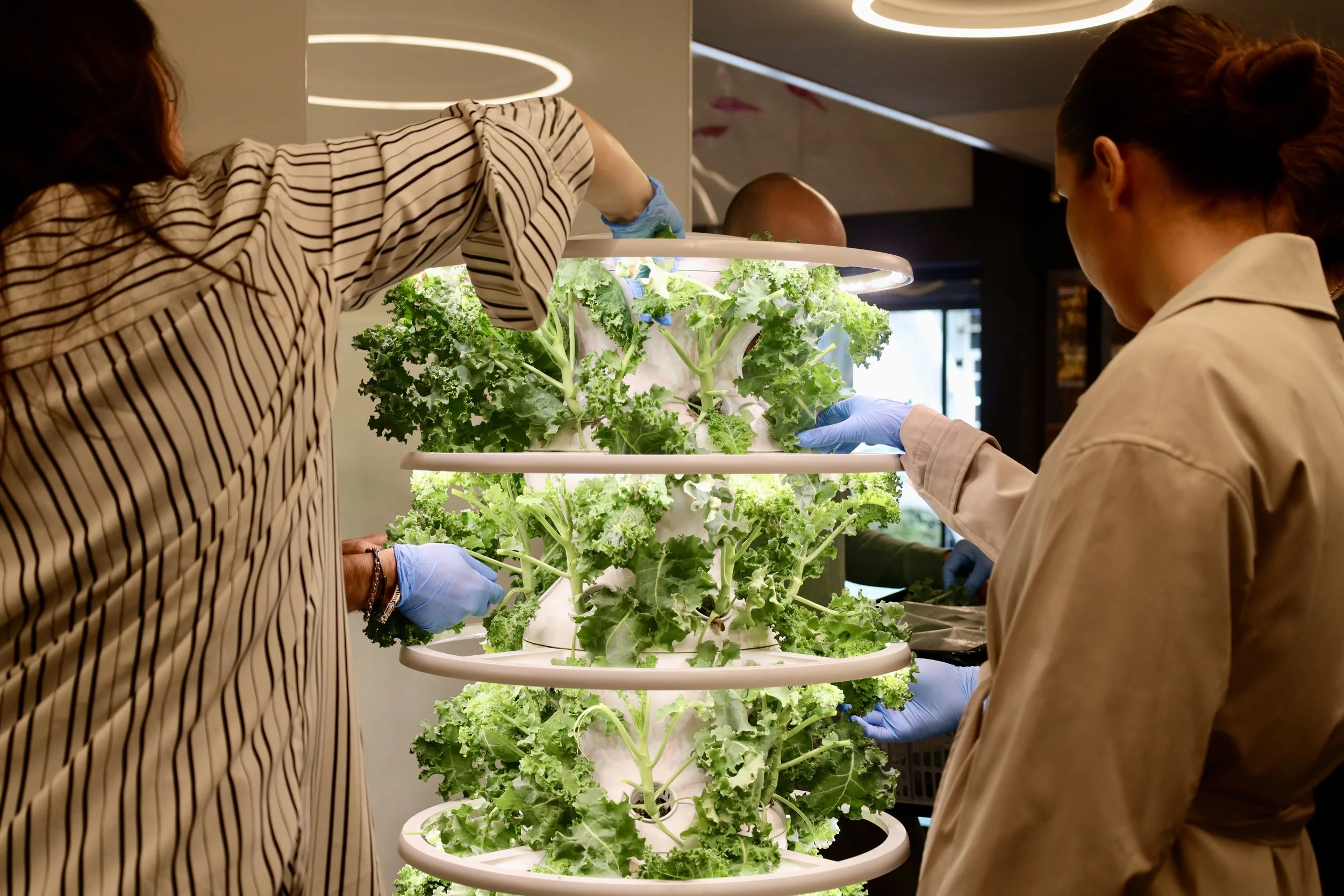
A community garden creates a simple reason to stop, take part and get to know the neighbours.
Nature as a third place
A shared green space can act as a third place: neither home nor work, but a neutral setting where people can meet without an appointment or a fixed purpose. Watering, noticing a new shoot or discussing a harvest are small gestures, yet they give residents a natural reason to stay a little longer and start a conversation.
The World Health Organization review of green and blue spaces supports a broad relationship with mental wellbeing, relaxation and social interaction. It also notes that results vary with access, quality, safety and the characteristics of each community. Good design matters as much as adding vegetation.
Designing encounters, not just gardens
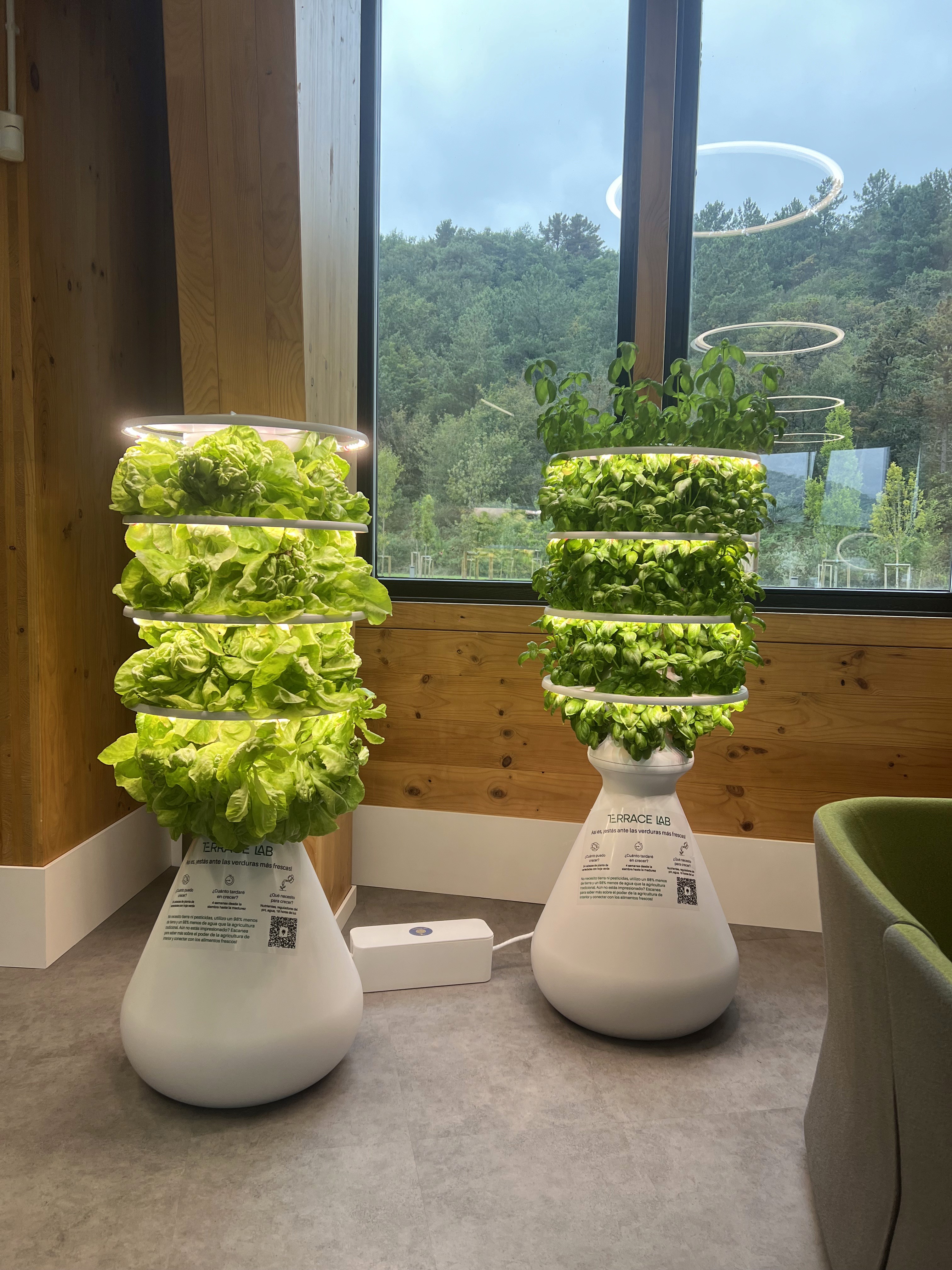
At TerraceLab, we do not see the garden as background decoration. We design it as a reason for people to meet. Every installation begins with practical questions: where do residents pause, which routes do they share, and which activity can become part of daily life without adding friction?
Location, visibility and ongoing activation are decisive. A hidden garden with no simple routine can remain empty. A visible installation in a shared route, with clear moments for planting, care and harvest, creates continuity and gives people different ways to take part.
From infrastructure to community
Community cannot be declared through rules or signs. It grows from conditions that make meeting easier and from experiences people can feel are their own. Nature does not solve isolation on its own, but it can turn an anonymous common area into a place with life, memory and conversation.
That is the goal: green should not be only something to look at, but something to care for and share. Where nature builds community. 🌿
Sources
Bertelsmann Stiftung (2024). A comparison of youth loneliness in Europe.