Workspaces
An office urban garden: turning a passing space into a living place
By the TerraceLab team · Published 14 October 2026
An office urban garden gives a shared area a practical role: a place to watch food grow and take part in activities together. A useful project starts with three decisions: where the garden belongs, who will look after it and how people can get involved.
Naturklima offers a documented example in a professional setting. Its installation provides a starting point for planning a living workplace space, while keeping the evidence from that project separate from recommendations for your own building.
The Naturklima office urban garden: what is documented
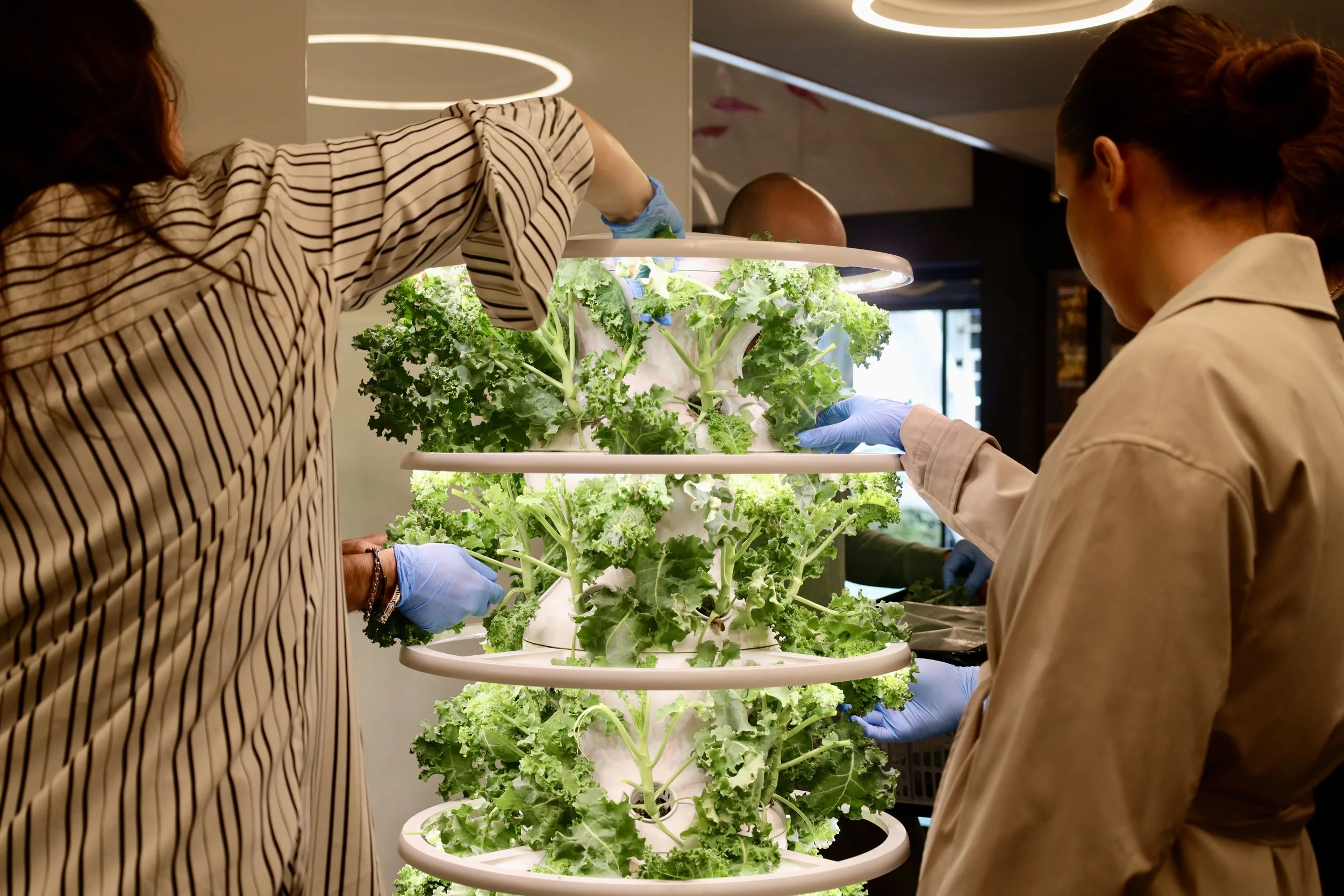
On 14 August 2024, Naturklima reported four TerraceLab growing modules in the entrance hall of its Eskuzaitzeta headquarters. The system uses recirculating water and LED lighting. Its first lettuce and basil harvest was donated to the Gipuzkoa Food Bank.
The announcement described an approximate capacity of 130 kg a year and harvests every four weeks. These were published projections, rather than audited annual output or a promise for other workplaces.
“This project is an excellent example.” José Ignacio Asensio, Naturklima president, in the 2024 announcement (translated from Spanish).
Read Naturklima’s original announcement for the project context and institutional statements.
The announcement does not specify the floor area or participant numbers, and it does not establish that the hall was previously empty. The photograph accompanying this article comes from TerraceLab’s own archive and shows the modules in use.
From available space to a working garden: four design decisions
1. Choose a place people can approach
An entrance hall, break area or shared lounge may be suitable. Observe where people walk and pause before selecting a location. Allow room for the growing unit, maintenance access and participation without restricting everyday circulation.
2. Define the experience before choosing the equipment
Decide whether the priority is everyday contact with food growing, cross-team activities or a recurring sustainability programme. A specific purpose makes it easier to choose the location and decide how the project will be evaluated.
3. Plan operations alongside installation
A Farming as a Service approach should make responsibilities clear. Ask the proposal to specify maintenance, monitoring, replenishment and incident support as well as initial installation. The linked overview is in Spanish.
4. Make room for harvesting in the calendar
Use an introductory session to explain how the garden will work. Plan later activities around the actual crop and the team’s availability. Keep dates flexible until the operator confirms readiness; a scheduled event should follow plant development rather than assume it.
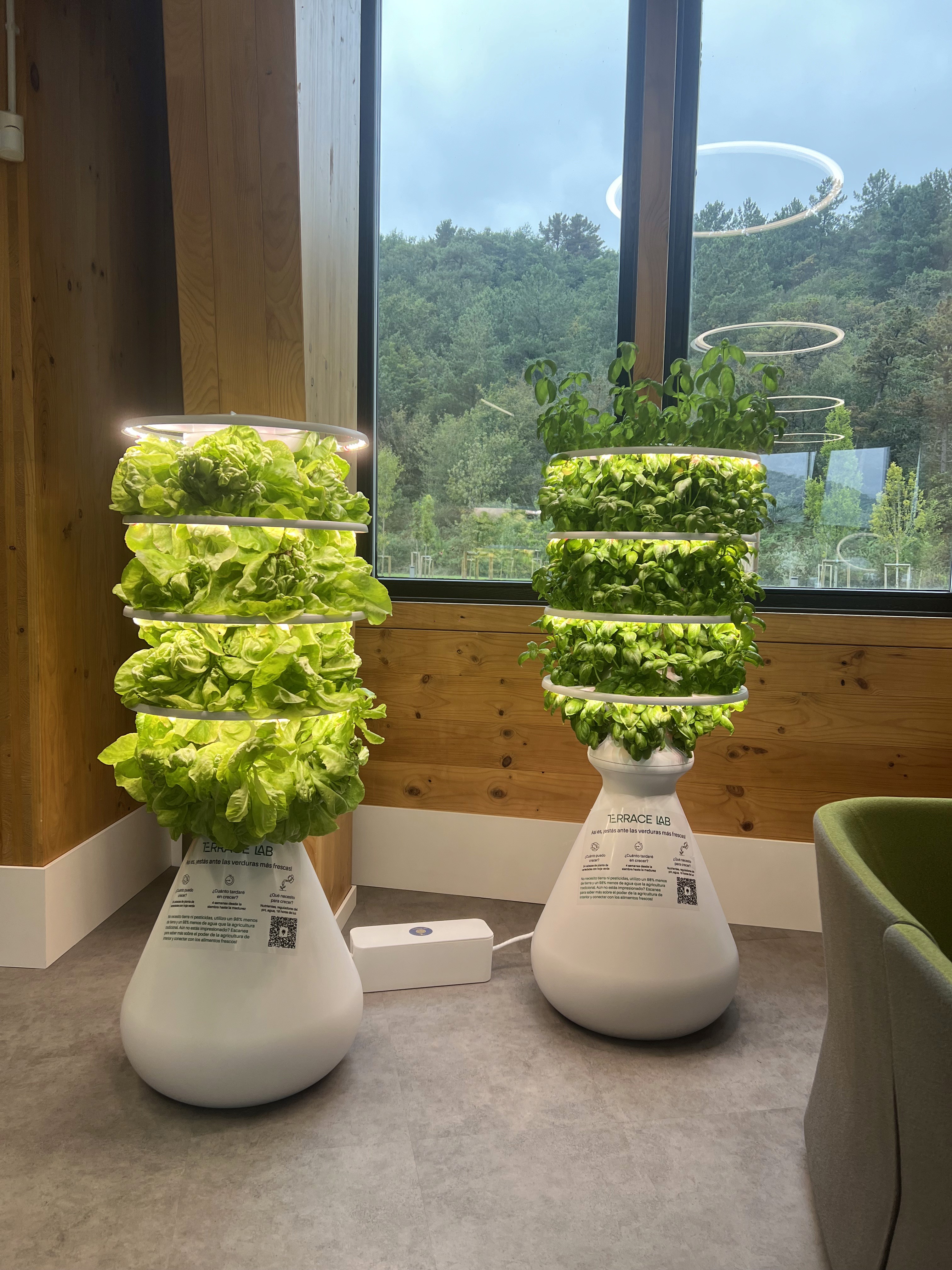
Two growing modules at Naturklima. Photograph from the TerraceLab archive showing the operating installation, rather than a recreated before-and-after.
What to check before installing an indoor workplace garden
Use this checklist to prepare a site visit and compare proposals. Each point needs an answer for your building.
Space and access: measure the location and allow for circulation and maintenance.
Lighting and electricity: check the system requirements and how operating hours fit neighbouring work areas.
Water and cleaning: agree how the reservoir is replenished, equipment is cleaned and incidents are handled.
Ownership: name the internal contact and the garden operator, including holiday cover.
Participation: choose suitable activity formats and make attendance voluntary.
Harvest use: agree in advance how produce will be collected and used.
Our indoor hydroponics guide explains the growing conditions in more detail. For procurement planning, see what determines the cost of a managed hydroponic garden.
How to document change and participation
For your own project, photograph the chosen location before installation and repeat the same framing once the garden is operating. Record the measured footprint, launch date and changes in how the space is used. This produces a meaningful before-and-after record.
Track activities, attendance and actual harvested weight separately. Someone who joins three sessions represents three attendances but one unique participant. If you collect feedback, record when it was given and obtain permission before publishing an attributed testimonial.
Workplace wellbeing can be a programme objective, but installing an indoor garden does not by itself demonstrate higher productivity or reduced stress. Such claims need a separate evaluation. Start with outcomes you can observe and measure in your own setting.
Frequently asked questions about office urban gardens
How much floor space does an office garden need?
It depends on the modules, layout and access requirements. Ask for a measured proposal with circulation space. The Naturklima case does not provide a universal footprint.
Who maintains the garden?
The service agreement should define this. For a managed installation, specify operator tasks, monitoring frequency and the internal contact’s role if an issue arises.
When can we hold the first harvest event?
When the crop is ready. Timing varies with the plants and growing conditions. Confirm readiness with the operator before announcing a date to the team.
How do we encourage people to use it?
Give the programme an owner, explain how to join and plan activities that fit the team’s working day. Use attendance and feedback to adjust the format over time.
Plan a living space for your workplace
Start with a photograph, the dimensions of the location and the purpose of the programme. These help define a garden and activity plan that can fit everyday building operations.
Explore TerraceLab’s workplace solution or request a space assessment.