Hydroponics
Indoor hydroponics: light, water, nutrients and maintenance

Growing hydroponically indoors takes more than removing soil. A reliable installation brings together four things: enough light for the crop, suitable water, a monitored nutrient solution and regular maintenance. This guide explains what to check before installation and throughout operation.
The system at a glance
In a recirculating setup, the usual route is reservoir → pump → roots → return to the reservoir. Light supplies energy for photosynthesis, while ventilation helps manage the environment. Some hydroponic systems work without a pump or recirculation; the right design depends on the crop and the purpose of the space.
The first decision is not which device to buy. Decide what you want to grow, where it will stand and who will care for it. Lettuce, herbs and tomatoes differ in their needs for light, space and nutrient solution.
Light: amount, duration and distribution
A bright window helps, but it does not guarantee enough light for every leaf all year. Assess the available daylight and design any supplementary lighting for the full growing area, not just the plant closest to the lamp.
The University of Minnesota suggests 12 to 14 hours of total light per day as a starting point for hydroponic lettuce and herbs. It is not a universal prescription: intensity, distance, crop, growth stage and heat from the fixture also matter.
A timer makes the photoperiod consistent. During inspections, look for plants stretching towards the light, discoloured leaves or one area growing more slowly than another. Measure and adjust the cause before simply increasing the hours.
Water: test it before recirculating it
Source water already contains minerals. Its pH, electrical conductivity and alkalinity shape the final nutrient solution. Oklahoma State University recommends testing it before formulating nutrients: unsuitable water can create imbalances immediately or later in production.
In a recirculating system, check that the reservoir has enough water, flow reaches all roots and the return is clear. Recirculation reuses solution but still needs monitoring, because plants do not take up water and nutrients in the same proportions.
Shield the reservoir from direct light and prevent leaks or standing water outside the circuit. Decide how the garden will cope with a power cut, a stopped pump or a long absence before opening it to users.
Nutrients: use pH and EC together
Plants need macro and micronutrients dissolved in water. Recipes usually express concentrations in mg/l or ppm. Penn State Extension explains how to calculate them from the fertiliser and the solution volume, accounting for nutrients already present in the water.
pH affects nutrient availability. Electrical conductivity, or EC, estimates the total concentration of dissolved salts, but cannot by itself reveal a shortage of one particular element. Record both readings alongside the crop, its appearance and any adjustments.
As one example, an Oklahoma State University guide lists 1.2–1.8 mS/cm EC and pH 6.0–7.0 for hydroponic lettuce. Those are reference ranges for that crop; targets should reflect the variety, source water, growth stage and system.

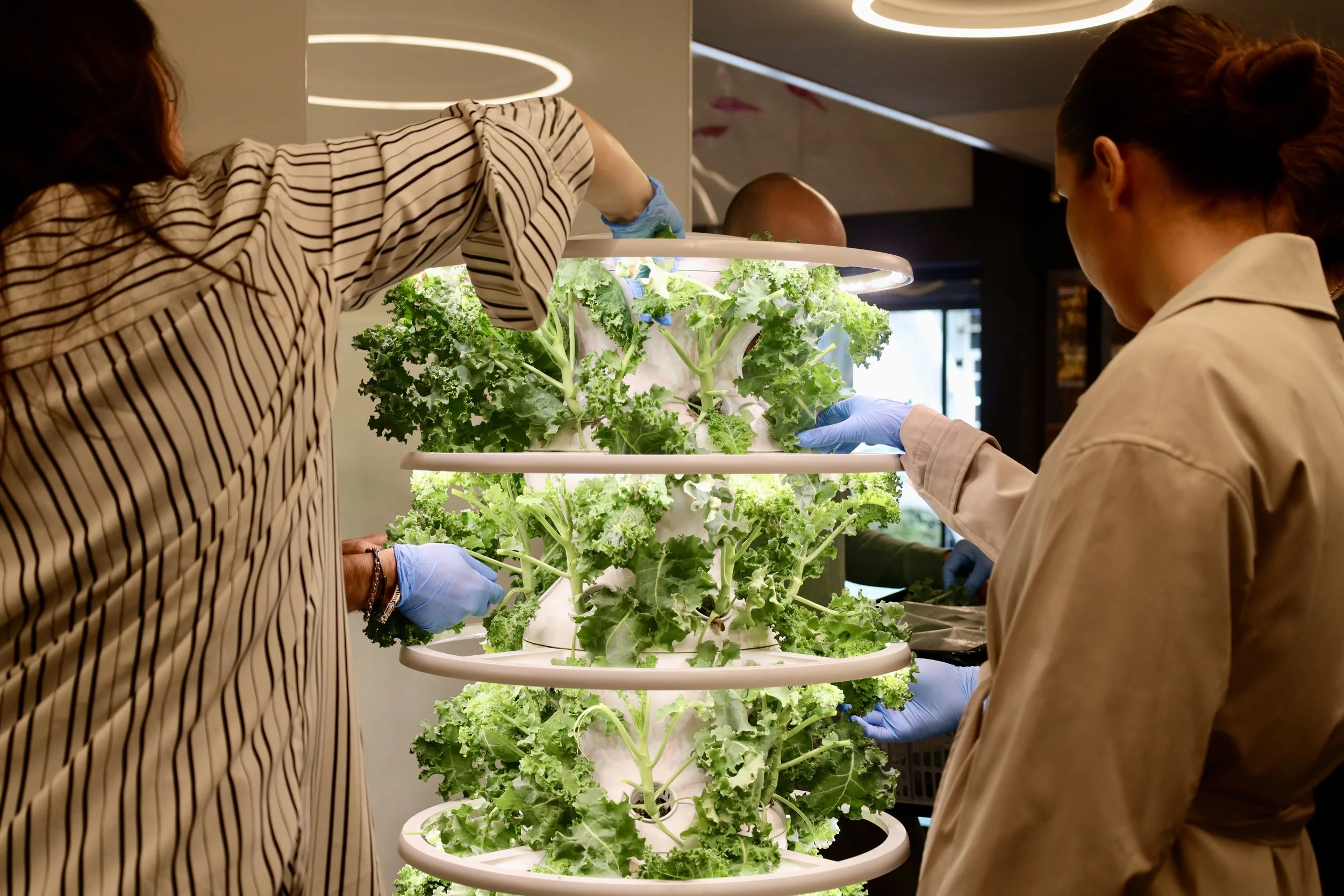
In a vertical system, lighting, irrigation and access to every plant must be designed together.
Maintenance: a routine that prevents surprises
An indoor installation needs short, regular checks. Automation can monitor and dose, but it cannot replace inspecting leaves, roots, connections and surfaces. Assign a responsible person and keep a simple record of each visit.
At each check
Confirm lights and timers follow the intended schedule; check water level and flow; inspect leaves and roots; and look for leaks, unusual noises or loose connections. Record the date and any issue. The right frequency depends on the system size, circuit and access to the space.
On a regular schedule
Measure pH and EC with instruments calibrated according to their instructions. Inspect the reservoir, pipes, filters and pumps; remove plant debris; and plan new sowings and harvests. When you adjust the solution, note what you added and measure again. Guesswork makes faults harder to diagnose.
Between crop cycles
Clean components that contacted water and plants according to the equipment protocol. Replace or adjust the solution when needed and inspect parts subject to wear. Hygiene matters especially when the leaves will be eaten.
Checklist before installing an indoor garden
1. Define the crop, number of plants and purpose: production, learning, wellbeing or community activity. 2. Measure floor area, height, daylight, temperature and ventilation. 3. Confirm safe access to water, power and drainage or a clear emptying procedure. 4. Decide who will perform checks, how often and where they will be recorded.
5. Ask the proposal to specify photoperiod, expected power use, circuit type, water treatment, nutrients, cleaning, replacements and fault response. A good design must remain practical after installation day.
Warning signs worth investigating
Uneven growth may point to differences in light or flow. Yellow leaves have several possible causes, so adding fertiliser is not automatically the answer. Dark roots, unusual odours, foam or rapid changes in pH or EC call for a check of the water and circuit. Record and verify first, then correct the identified cause.
Frequently asked questions
Is artificial light always necessary?
Not always. It depends on the daylight the crop receives throughout the year. Many indoor spaces need supplementary lighting for consistent production.
Must all the water be changed every week?
There is no universal schedule. Topping up or replacing solution depends on the system, crop, source water and trends in pH and EC. Define it in the operating plan.
Can a team without experience manage it?
Yes, with an appropriately sized system, clear instructions and support. The key is assigning responsibility for routine checks and fault response.
Technical sources
University of Minnesota: lighting for indoor plants. Light duration and distance for lettuce and herbs.
Oklahoma State University: EC and pH guide. Water quality and crop reference ranges.
Penn State Extension: calculating nutrient solutions. Nutrient concentrations and formulation.
FAO: managing a non-recirculating hydroponic unit. An example of a pump-free design.
New to the topic? Read what a hydroponic garden is and how it works. To assess investment and service, see the cost of a managed hydroponic garden. Have a space in mind? Tell us about it.