FaaS
How much does a managed hydroponic garden cost?

The cost of a managed hydroponic garden depends on more than the equipment. The final investment combines the size and technology of the system, its integration into the space and the service required to keep it productive. Two installations that look similar can therefore have very different proposals.
Quick answer: what you are paying for
A managed project pays for a complete solution: site assessment, design, purchase or rental of the unit, installation, commissioning, consumables, crop monitoring, maintenance and, when selected, a programme of harvests or community activities.
TerraceLab offers two models. With rental plus service, the cost is concentrated in a recurring fee and the unit does not need to be purchased. With ownership, the equipment becomes the client’s asset and operation can be contracted separately. Both options are explained on the pricing page.
The seven variables that shape the proposal
1. Garden size and capacity
The number of growing positions, available height and expected output determine the scale. A demonstration module in a shared area does not have the same scope as a continuous rotation system serving a kitchen or several parts of a building.
2. Light and site conditions
Available daylight may reduce the need for artificial lighting. Indoors, LED power and operating hours form part of both the design and the running cost. Temperature, ventilation and access to water and electricity also matter.
3. Level of automation
Pumps, timers, sensors and monitoring help stabilise the crop and reduce repetitive work. Automation improves control, but it also increases the initial investment and needs maintenance. The right solution simplifies operation without adding technology the project does not need.
4. Integration, transport and installation
Distance, building access, installation windows, protective work, facilities coordination and custom finishes can change the commissioning cost. A clear proposal should show these concepts separately.

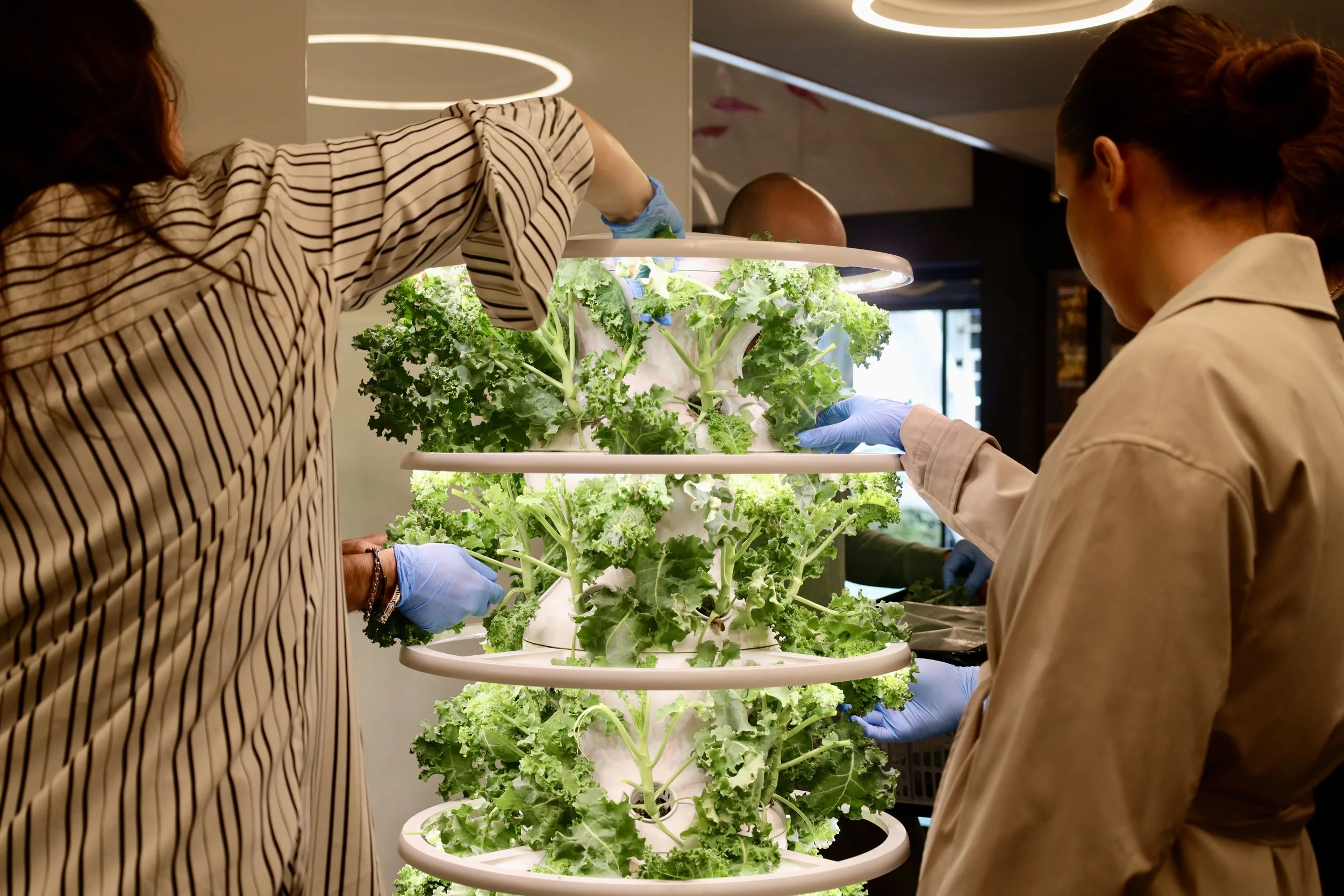
Lettuce growing in hydroponic channels: a visible part of the system's operation and consumables.
5. Operation and maintenance frequency
A living garden needs inspections, cleaning, pH and nutrient control, replacement seedlings, problem prevention and harvest planning. Frequency depends on the system, crop selection and the client’s level of participation. This service is a central part of the price, not an optional afterthought.
6. Consumables and crop rotations
Seeds, seedlings, nutrients, substrates, wear parts and cleaning products create recurring costs. The proposal should also define how many rotations or replacements are included and what happens when a plant reaches the end of its cycle.
7. Activities and impact measurement
When the goal is wellbeing, education, community or ESG communication, the proposal may include workshops, participatory harvests, signage, content and metrics. In these projects, the value lies not only in growing leaves but in helping people understand and use the garden.
Rental or purchase: how the cost structure changes
Rental with service is often suitable when flexibility, a pilot or predictable operating expenditure matters. Purchase makes sense when the project is stable, the unit should become an asset and the organisation is comfortable separating investment, operation and maintenance.
Neither model is universally cheaper. Compare total cost over the intended period, end-of-contract conditions, included consumables and responsibility for faults.
An illustrative proposal without invented figures
Imagine an office seeking a visible vertical garden in a shared area, with lighting, regular maintenance and four activities per year. A transparent proposal should separate: assessment and design; equipment; transport and installation; commissioning; operation and maintenance fee; consumables; activities; and optional extras.
This structure lets the client compare scope rather than only a final number. A lower quote may exclude maintenance, replacements or activities; a higher one may include more service and reduce internal workload. Without seeing the space and understanding the objective, a fixed published figure would be unreliable.
Costs often missed in the first comparison
Ask about electricity, minor site adaptations, water connection, plant replacement, travel, fault response, removal or relocation and staff training. It is also important to know whether tax is included and how long the proposal remains valid.
How to request a comparable proposal
Prepare five inputs: location, photographs and measurements, approximate number of users, primary objective and desired level of participation. Add whether you prefer rental or purchase and the expected activity frequency. A clearer use case leaves less room for unforeseen items.
If you are assessing a project, tell us about the space and objective. TerraceLab can define the format, service and tailored proposal without turning a rough estimate into an unrealistic promise.
Frequently asked questions
Can a garden be installed on a limited budget?
Yes, if size, automation and service level are aligned with the objective. A well-sized pilot usually creates more learning than a large installation without the resources to operate it.
Is maintenance always included?
It depends on the model. Rental with service normally includes it; with purchase it may be contracted separately. Frequency, consumables and response times should be stated in the proposal.
Does artificial lighting make the project much more expensive?
Lighting affects investment and consumption, but its weight depends on daylight, power, photoperiod and electricity prices. It should be calculated for the specific crop and location.
Why is there no single price?
Because capacity, building conditions, integration and service differ between projects. A single price would hide meaningful differences or move costs into later items.
Sources
FAO. Popular hydroponic garden: installation, management, nutrition and costs.
Penn State Extension (2026). Calculating and managing nutrient solutions in hydroponic systems.
Related reading: what a hydroponic garden is and how it works.