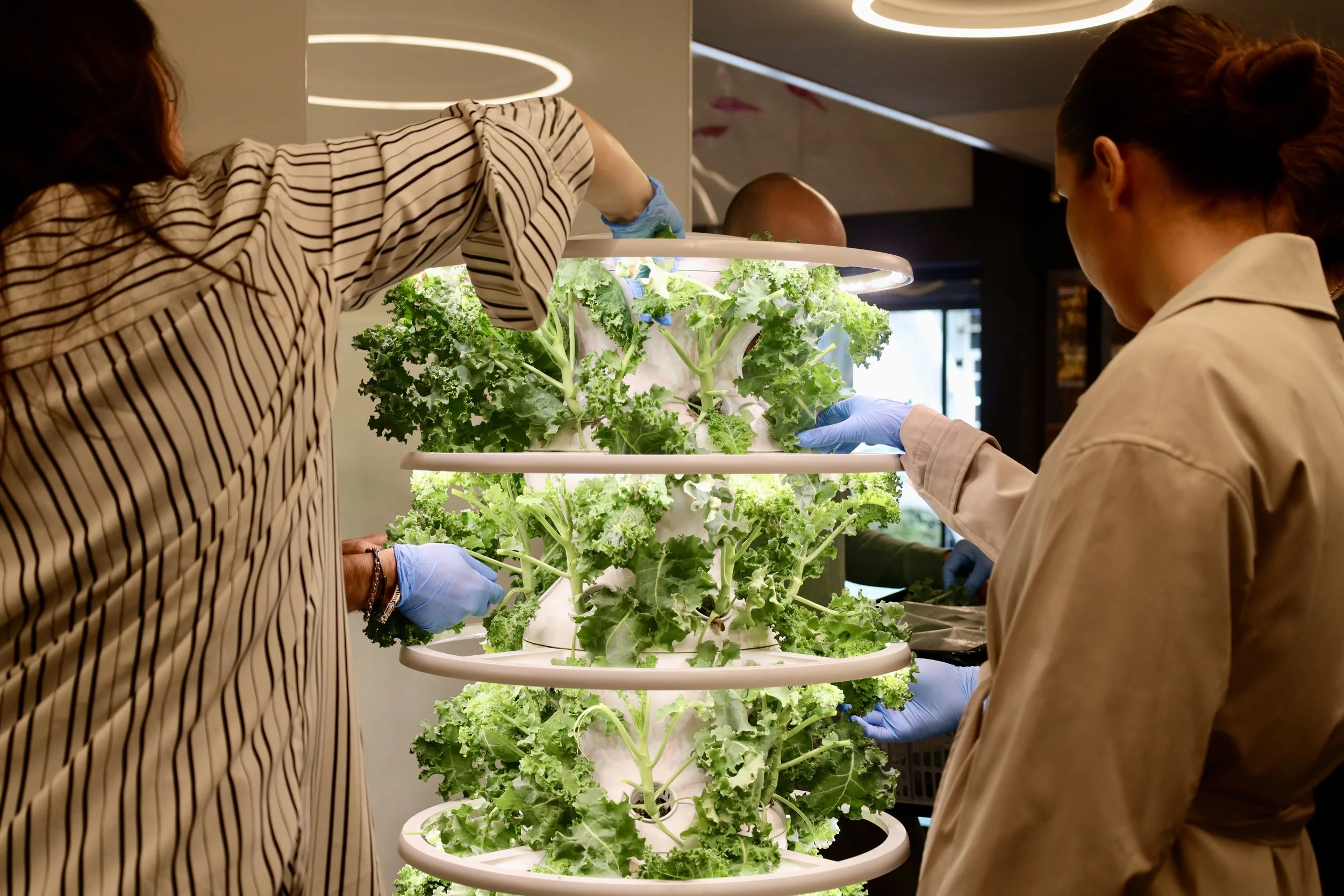
Hydroponics
What is a hydroponic garden and how does it work?
A hydroponic garden allows plants to be grown without soil through a circuit of water enriched with the nutrients they need. It is a form of agriculture that is especially useful in cities and interior spaces, where available land is limited but there is the opportunity to produce fresh food close to people.
What exactly is hydroponics?
Hydroponics replaces soil with a controlled nutrient solution. The roots are housed in supports or small inert substrates and receive water, oxygen and minerals on a regular basis. The goal is not to speed up nature, but to create stable conditions for the plant to use its resources efficiently.
In a well-designed system, water can recirculate and return to the reservoir after passing through the roots. This reduces losses, makes crop monitoring easier and allows the garden to be installed in places where a conventional garden would not be viable.
How a hydroponic garden works step by step
It all starts in a tank with water and nutrients. A pump drives the solution through the irrigation system; Afterwards, it reaches the roots and returns to the tank. Natural light or growing lighting provides the energy necessary for photosynthesis, while ventilation helps maintain a healthy environment.
The basic components
An indoor hydroponic garden usually combines a tank, pump, pipes, planting areas, lighting and a control system. It also requires checking the water level, nutrient concentration and pH. Automation simplifies repetitive tasks, but it does not eliminate observation: looking at the leaves and roots is still the best way to understand the crop.
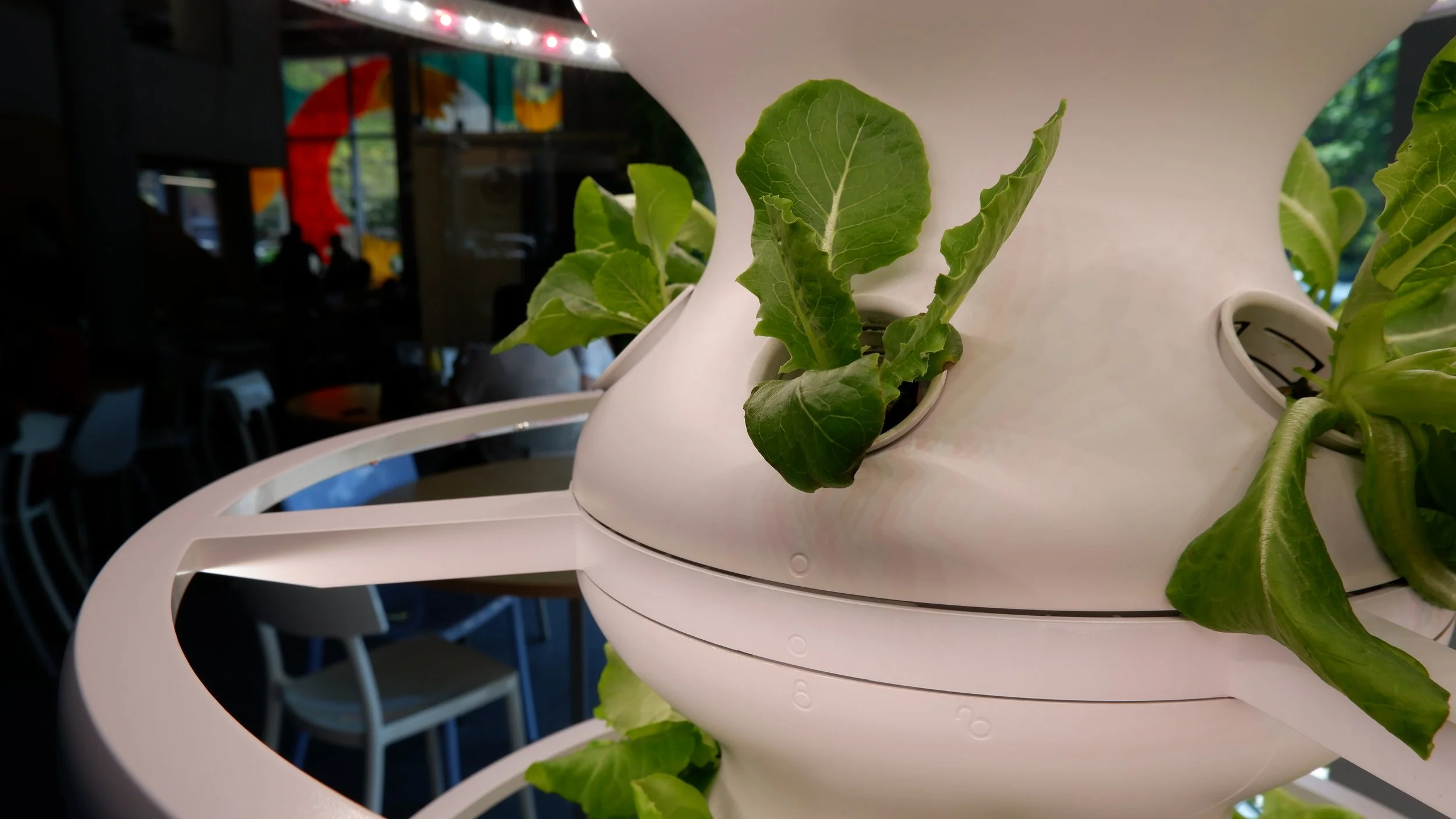
A hydroponic tower takes advantage of the height and brings water and nutrients directly to the roots.
Advantages in urban and interior spaces
The main advantage is flexibility. By not depending on a plot of land, cultivation can be integrated into offices, educational centers, hotels, residences or shared use spaces. Vertical systems take advantage of height and convert a small surface into a visible productive point.
They also allow better control of irrigation, keeping the environment cleaner and planning harvests of green and aromatic leaves for much of the year. When the garden is close to those who consume or care for the plants, the production gains educational, social and experiential value.
What can be grown
Lettuces, arugula, kale, chard, basil, mint, parsley and cilantro tend to adapt well to indoor systems. They are species with a relatively short cycle, occupy little volume and allow frequent harvests. Selection should consider available light, temperature, intended use, and maintenance rate.
How to integrate the garden into a space
Design must start with people and place. It is advisable to study circulation, proximity to an electrical and water outlet, the quality of light, noise and ease of cleaning. A beautiful but difficult to service system quickly loses its value; one accessible and well accompanied becomes part of the culture of the space.
Is it suitable for any project?
Hydroponics works best when there is a clear goal: growing herbs for a kitchen, teaching science, activating a community, or incorporating productive nature into a building. At The Terrace Lab we design each project around that purpose, combining installation, support and activities so that the garden is truly used.