Workspaces
Biophilia vs productive nature: what each one brings to the office

Biophilia brings nature into the office so people can see and feel it. Productive nature goes one step further: beyond being seen, it grows, gets cared for and is harvested. They are not mutually exclusive, but they serve different goals, and it pays to know which one your space needs before investing.
What biophilic design is
The term biophilia, popularised by biologist Edward O. Wilson, describes the human tendency to seek contact with other forms of life. Biophilic design brings that idea into architecture: daylight, natural materials, outdoor views, water, organic shapes and, of course, plants. A useful reference is 14 Patterns of Biophilic Design by Terrapin Bright Green.
In an office it usually means green walls, indoor plants, preserved moss or furniture with built-in greenery. Its main purpose is environmental and aesthetic: a more pleasant, calmer workplace that feels higher quality.
What we mean by productive nature
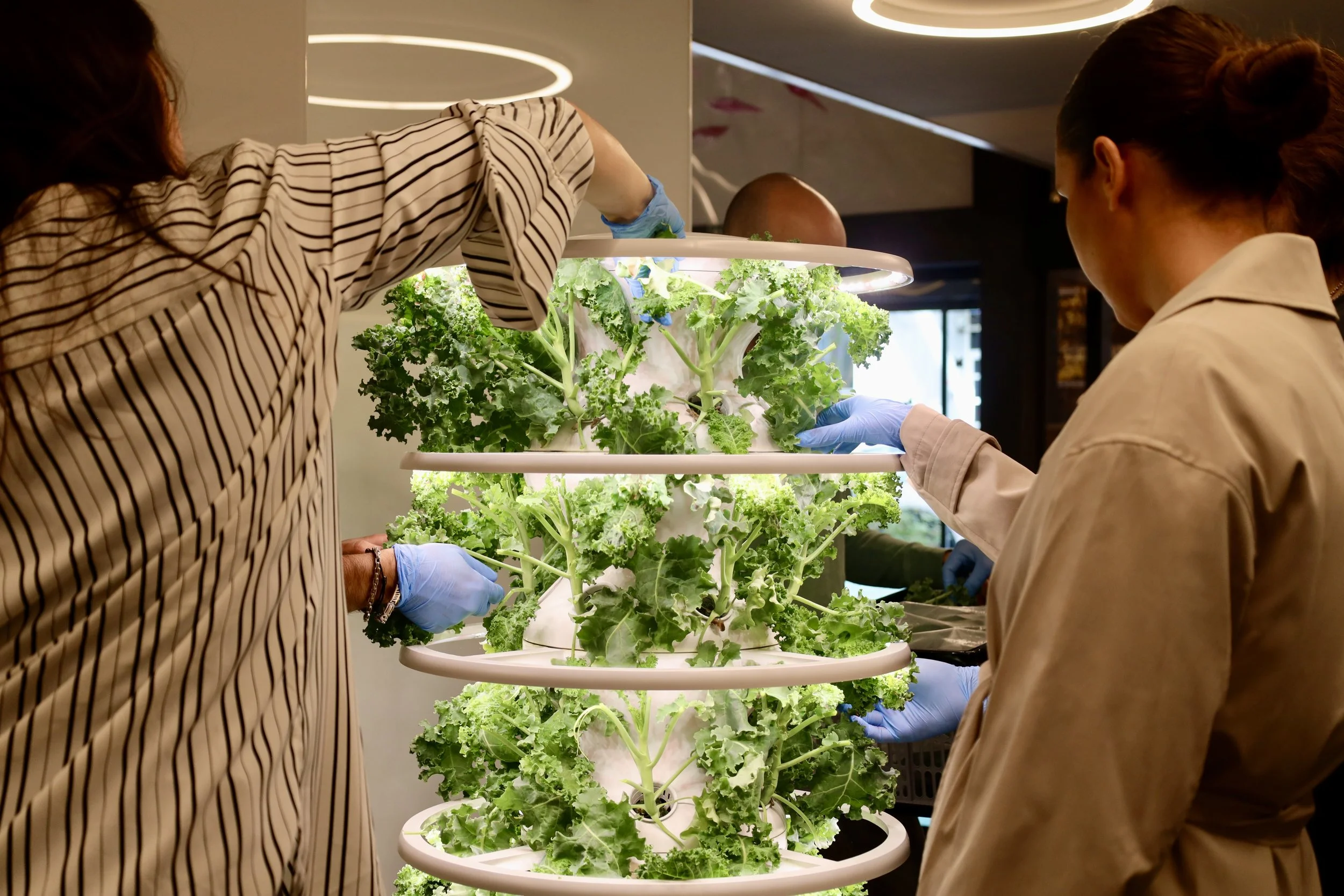
Productive nature is greenery with a visible cycle and a usable result: lettuce, basil, mint or kale that sprout, grow and are harvested inside the building. Indoors, the most practical way to get there is a managed hydroponic garden, which needs no soil and fits into shared areas.
The key difference is not the plant but the relationship people build with it. A moss wall is something you look at; a garden is something you visit, tend, harvest and talk about. That is why it works as a tool for culture and engagement, not just decoration.
The main differences, side by side
Purpose: biophilia improves the atmosphere; productive nature adds activity, learning and a shared outcome.
Engagement: biophilia is passive and asks nothing of people; a garden invites involvement, though nobody is required to take part.
Change over time: a green wall is meant to look the same every day; a garden changes weekly and creates milestones (sowing, growth, harvest).
Maintenance: both need it. Biophilia needs watering, pruning and replacements; a garden also needs nutrient control, crop rotation and harvest planning.
ESG story: biophilia signals care for the environment; productive nature lets you tell concrete stories about food, resources and community.
Cost: it depends on size, system and the service included. Comparing installation prices alone leads to the wrong conclusions.

Productive nature adds something decoration lacks: harvests that are shared and eaten.
Cost and maintenance: an honest comparison
A decorative green wall may look simpler, but it still needs inspections, plant replacements and often automated irrigation. A productive garden adds crop management: seeds or seedlings, nutrients, pH control and a harvest routine.
So the useful question is not which one is cheaper, but what the service includes and who takes care of each task. In how much a managed hydroponic garden costs we break down the line items worth requesting separately so you can compare proposals fairly.
When to choose each option
Biophilia is the better fit when the goal is to change how a space feels with little involvement from the team: receptions, meeting rooms or corridors where nobody stops.
Productive nature makes more sense when you want people to meet, run wellbeing activities or make your sustainability strategy visible every day. Canteens, cafés, break-out areas and multipurpose rooms are its natural home.
How to combine them in one project
The best workplaces do not pick just one. They use biophilic elements to set the overall atmosphere and keep one productive spot as the heart of the activity. The garden gives the greenery a reason to be visited and a conversation that keeps going.
Start by defining what you want to happen in the space, not what you want it to look like.
Place the garden where people already gather: near the coffee point, the canteen or a meeting area.
Use ornamental greenery to create visual continuity across the rest of the floor.
Plan light-touch activations: one harvest a month, a tasting or a short workshop is enough to keep interest alive.
To see how this plays out day to day, our article on office urban gardens, wellbeing and culture covers location, engagement and internal communication.
Frequently asked questions
Does a hydroponic garden count as biophilic design?
Yes. It brings living greenery, colour and contact with nature, which are biophilic principles. The difference is that it also produces food and creates activity around it.
Does productive nature mean the team has to work in the garden?
No. With a managed service, the provider handles the technical maintenance. Team involvement is voluntary and happens at specific moments, such as harvests or workshops.
Which one takes up more space?
It depends on the format. A hydroponic tower has a footprint similar to a large indoor plant, while a decorative green wall can cover an entire wall. What matters is choosing the scale for the intended use.
Which one communicates a sustainability strategy better?
Productive nature is usually easier to explain, because it lets you talk about food, resources and participation with tangible examples. Biophilia conveys care for the environment, but with a more general story.
Wondering what fits your office? Tell us about your space and we will help you design an activation that combines atmosphere and activity.