Education
School garden: how to set one up step by step
A school garden is much more than a few pots in the playground: it is an outdoor (or indoor) classroom where pupils learn science, maths, nutrition and teamwork by looking after something alive. In this guide we cover the types of school garden, how to set one up step by step, what to grow each term and how to solve the problem that sinks most projects: maintenance during the holidays.
What is a school garden?
A school garden is a growing space inside a school that is used for teaching. It can be a plot of soil, raised beds in the playground, a vertical garden in a corridor or a hydroponic system in a classroom. What defines it is not the format but the fact that it is part of the school's educational project and is used regularly throughout the year.
That is why, before thinking about seeds, it is worth thinking about goals: what pupils should learn, which year groups will take part and who will look after the garden when there are no classes.
Benefits of a school garden
Hands-on science: germination, photosynthesis, the water cycle, nutrients and biodiversity are observed live instead of only in a textbook.
Applied maths: measuring growth, calculating areas, recording data in tables and drawing graphs.
Healthy eating: children are more willing to try vegetables they have grown themselves.
Sustainability: the garden connects with education for sustainable development, composting, water use and waste reduction.
Working together: sharing tasks, caring for something in common and presenting results to other classes or families.
Types of school garden
Not every school has a playground with soil, and it is not necessary. These are the most common formats and when each one fits:
In-ground garden: the traditional option. It needs land, plenty of sun and more preparation and watering. Ideal if the school has free space.
Raised beds or growing tables: accessible and easy to clean. They work well on concrete playgrounds and let pupils work without bending down.
Pots and planters: the cheapest way to start. Good for herbs and small crops, but they need frequent watering.
Vertical garden: uses walls to add a lot of growing area in little space. It needs a good irrigation system.
Hydroponic garden: grows plants without soil, using water and nutrients, and can run indoors with grow lights. The garden can be used all year round, including winter, and it is very clean. To understand how it works, read our guide on what hydroponics is and how it works.
How to set up a school garden step by step
1. Set goals and a team
Decide which year groups take part, which subjects the garden will support and who coordinates the project. A small group of teachers, backed by the head and, if possible, the parents' association, avoids everything depending on one person.
2. Choose the space
For an outdoor garden, look for a spot with at least six hours of direct sun a day, a water tap nearby and easy access for groups. For an indoor garden, what matters is light (natural or artificial), a nearby power socket and a floor that can be cleaned.
3. Pick the system
Choose the format based on the space, the time the team can dedicate and whether the garden has to work all year. A school without a playground, or one that gets very hot in June, may be better suited to an indoor hydroponic system; one with free land, to raised beds outside.
4. Work out the budget and look for funding
The cost depends mainly on the system, the size and whether maintenance or training is included. Beyond the school's own budget, it is worth checking local and regional calls for environmental education projects, as well as support from the parents' association or local businesses.

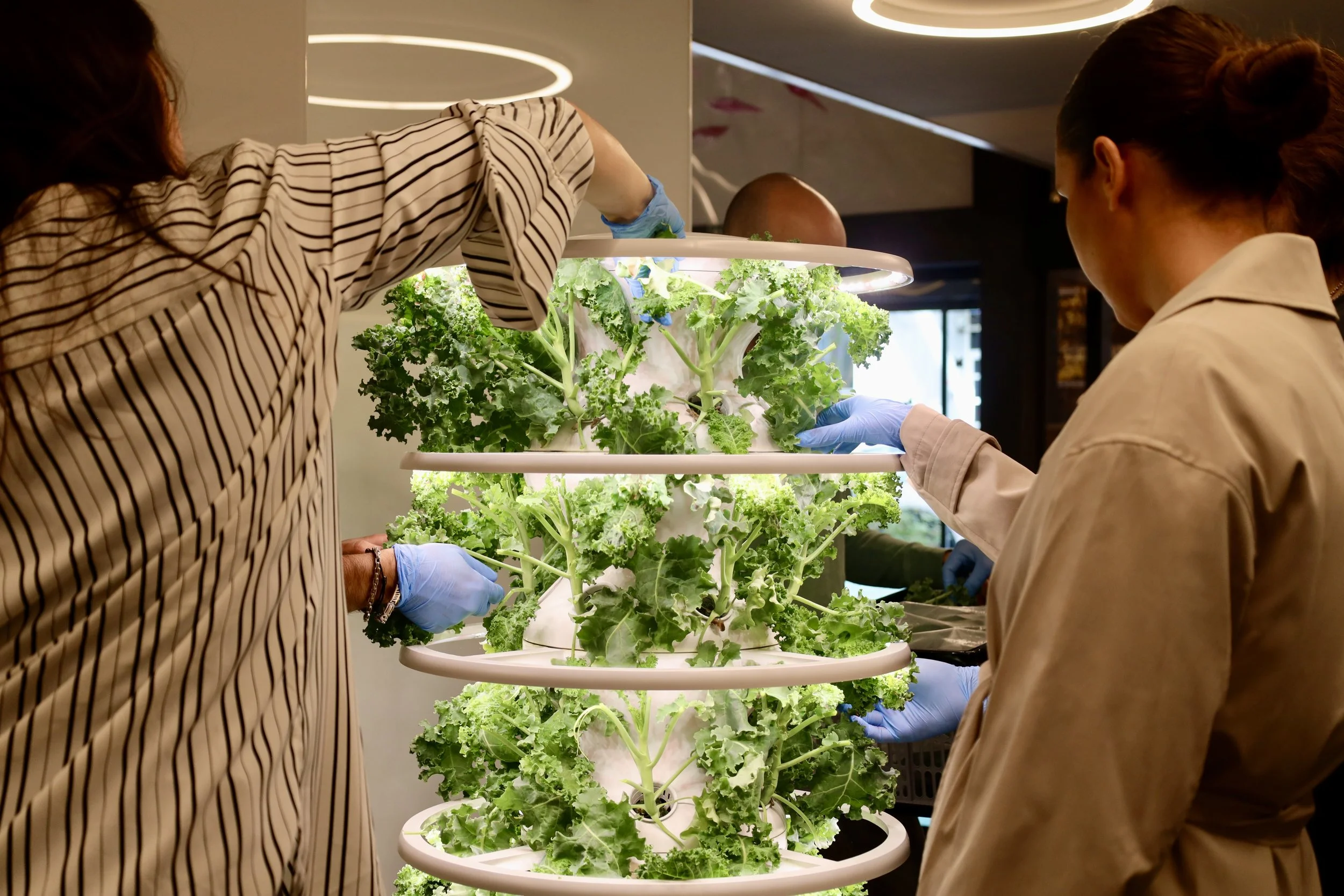
Watering, watching and harvesting: a school garden turns science into a routine pupils can touch.
5. Plan crops around the school calendar
The school year does not match the growing season: summer, when an in-ground garden produces most, falls during the holidays. So it pays to choose crops that are sown and harvested between September and June.
6. Organise maintenance
Set a rota by class, a simple task sheet (watering, checking for pests, recording growth) and who takes care of weekends and holidays. Automatic watering or an external maintenance service stops the project from dying in the first week without classes.
What to plant in a school garden each term
A guide for an outdoor garden in a continental Mediterranean climate such as Madrid's. Adjust the dates to your area.
Autumn term (September to December): lettuce, spinach, radishes, chard, broad beans, peas and garlic. Radishes and lettuce allow a first harvest before Christmas.
Spring term (January to March): follow-up of broad beans, peas and garlic; new sowings of lettuce and spinach; protected tomato or pepper seedlings in the classroom to watch germination.
Summer term (April to June): harvest what was sown in autumn, transplant the seedlings, strawberries, green beans and herbs such as basil or parsley.
In an indoor hydroponic garden the calendar is simpler: leafy greens and herbs can be grown throughout the school year. Our guide on what to grow in an indoor hydroponic garden has more ideas.
The holiday problem
It is the most common reason school gardens are abandoned. Four solutions work:
Choose short-cycle crops that finish before June.
Install programmed automatic watering.
Organise rotas with families or school staff in July and August.
Use a maintenance service that checks the garden when there are no classes.
School garden activities by age
Early years: sow in clear cups to see the roots, smell and touch herbs, count leaves and compare sizes.
Primary: a garden diary with scientific drawing, weekly growth measurements, classifying plants and a recipe with the harvest.
Secondary: experiments with variables (light, nutrients, pH), data analysis, calculating water use and projects on urban food systems.
For concrete ideas, see our STEAM activities for a school hydroponic garden and our guide on using a hydroponic garden as a living classroom.
Common mistakes
Setting up the garden without a clear person in charge.
Choosing summer crops that ripen when the school is closed.
Putting it in a corner without light or far from a water tap.
Using it one day a year instead of building it into lessons.
Not planning who looks after it during the holidays.
School garden FAQs
How much space do you need?
Less than you think. A one-square-metre growing table or a vertical garden on a wall is enough for a class to work with all year.
How much does a school garden cost?
It depends on the system, the size and whether maintenance and teaching materials are included. Planters cost very little; a managed hydroponic system is a bigger investment that includes equipment, support and follow-up. Our guide on the cost of a managed hydroponic garden explains the factors involved.
Can you have a school garden without a playground?
Yes. A hydroponic garden with grow lights works in a classroom, a library or a corridor, without soil or mess.
Who looks after it?
Ideally, pupils share the daily tasks and the technical work (nutrients, checks, holidays) is left to a responsible person or an external service.
A school garden without the extra workload for teachers
At The Terrace Lab we assess the space, install the system and take care of maintenance, supplies and support, with workshops and harvests with pupils. Teachers do not need to become farming technicians. To see how it would fit your school, read about our urban gardens for education or tell us about your space.